
Inside the Plant: Die Bonding, SMT, Extrusion and Binning
Five production areas, an equipment list with tolerances and capacity figures, and photographs of the lines as they run — so you can check whether a capability exists before you send a specification.
HFY LED runs an LED strip plant in Jiangmen, China, with COB die bonding at ±25 µm, four SMT lines at 18,000 m of strip per day, two platinum-cure silicone extrusion lines, a photometric laboratory with two spectroradiometers, and sealing and packing under one roof. Every reel is binned to SDCM ≤ 3 and burn-tested for 24 hours, and the plant is open to customer audits with two weeks' notice.
What sits in each part of the building
Floor area per department matters commercially: it tells you how much work is in the shop and whether a large part can physically be handled.
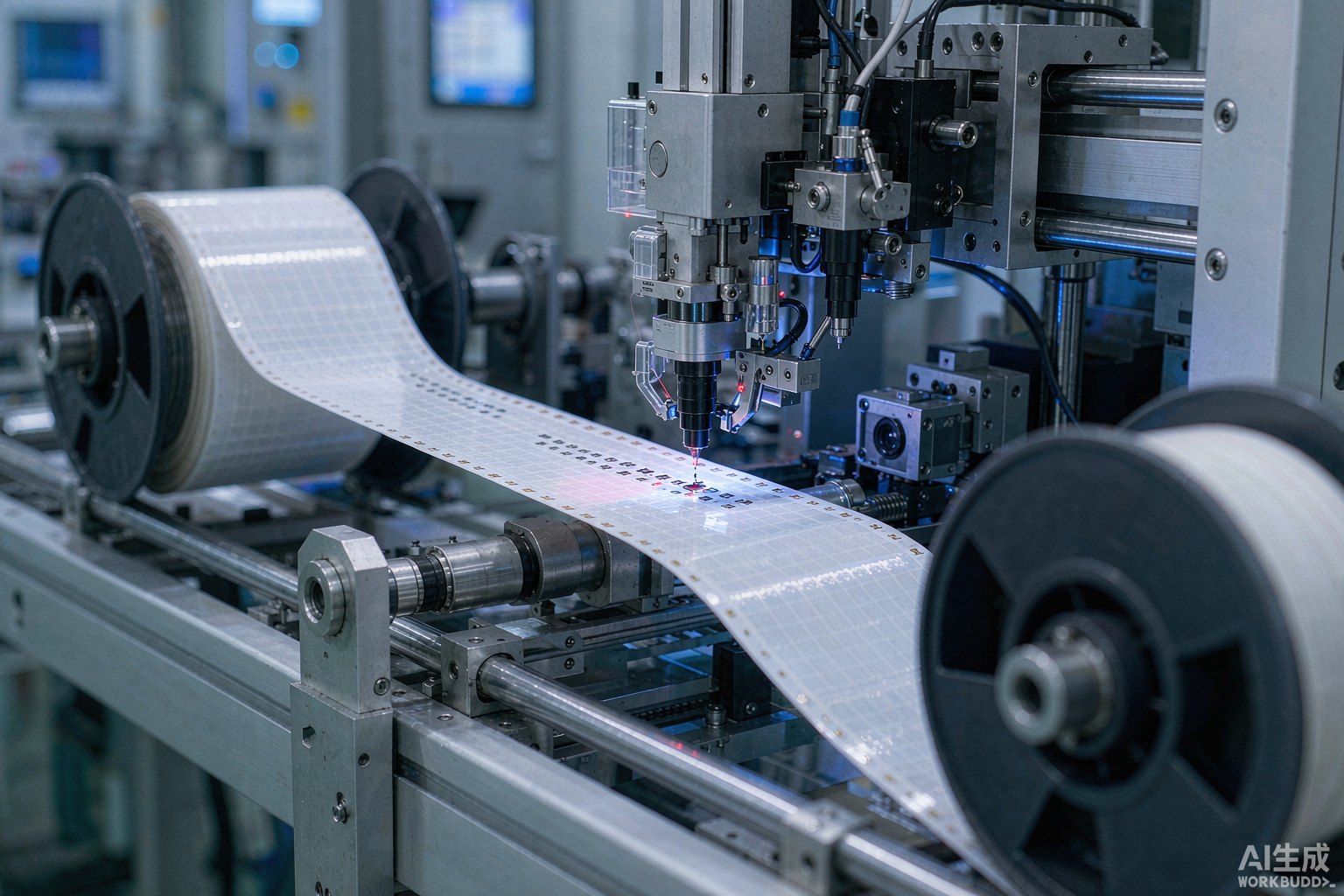
COB Die Bonding Line
Three die bonding lines at 320–504 chips/m with in-line phosphor thickness measurement.
Dies are bonded at ±25 µm placement accuracy and covered with a single phosphor layer held to ±5 µm, because chromaticity moves about 0.2 SDCM per micrometre of coating thickness. The room runs at 23 ± 2 °C and 45–55% RH: below 40% RH the phosphor skin cures with pinholes, and above 60% the die attach adhesive absorbs moisture and voids in reflow.
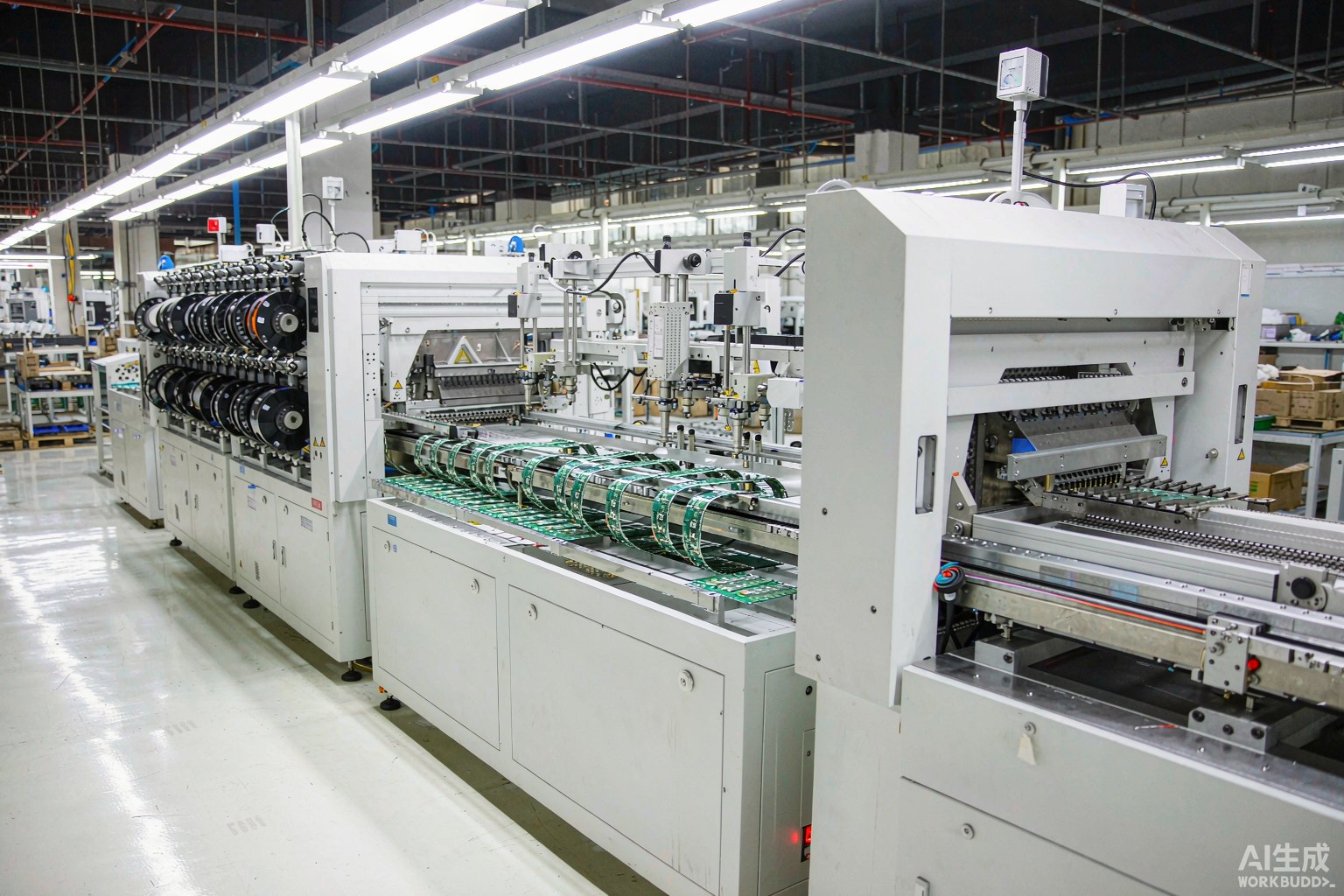
SMT Assembly Hall
Four SMT lines with 3D SPI, pick-and-place at 45,000 components/hour and 100% AOI.
Each line prints solder paste, inspects it in 3D, places components and reflows in ten zones under nitrogen at a 260 °C peak. Panels of 5 m flexible PCB run through on carriers; the carrier design, not the machine, is what keeps placement at ±0.05 mm on a substrate that wants to warp.
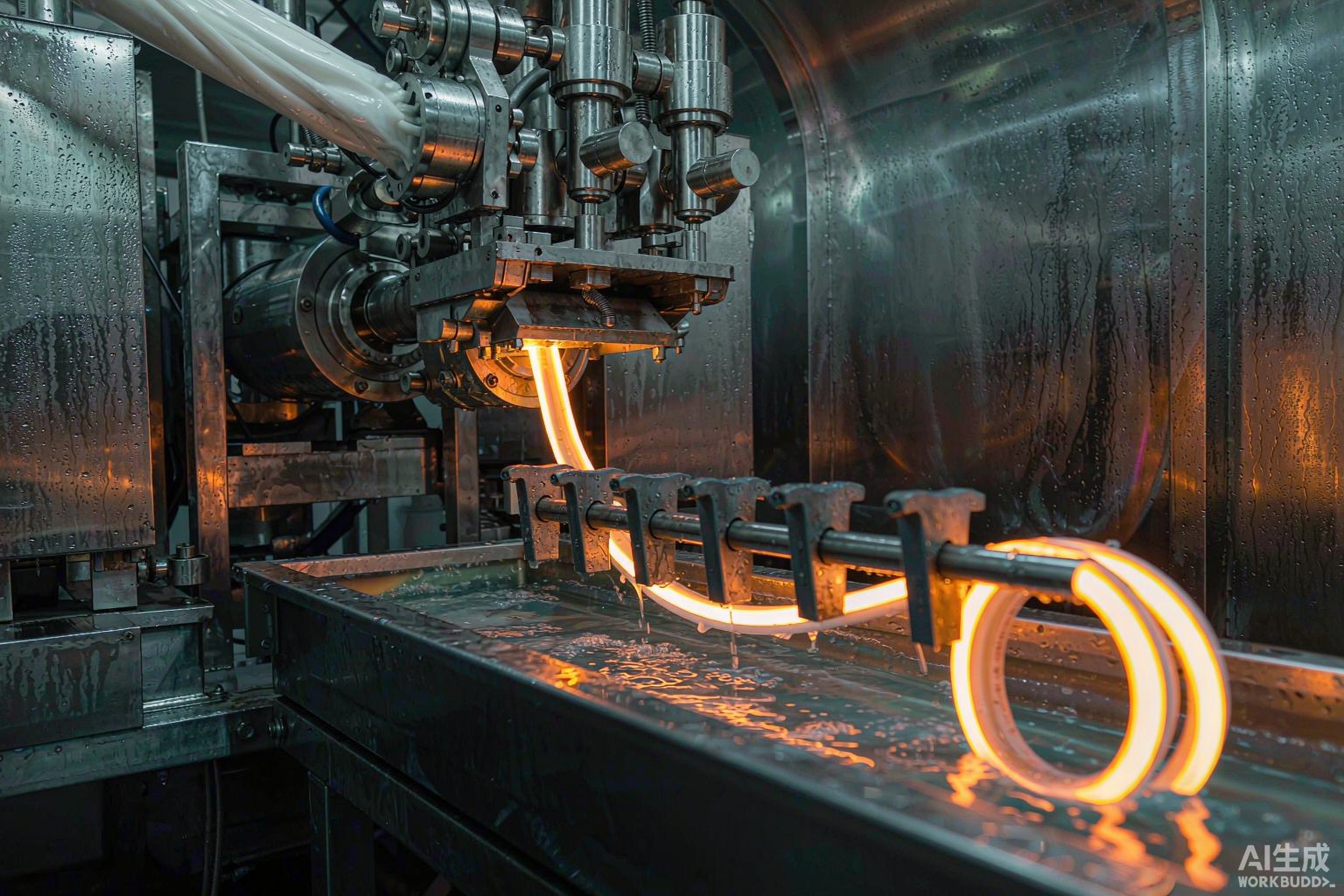
Silicone Extrusion
Two platinum-cure silicone lines for neon flex profiles from 6×12 mm to 10×20 mm.
Platinum-cure silicone is extruded around the FPC insert and cured continuously, with profile tolerance held to ±0.2 mm and colour matched to the project batch. Platinum cure costs more than peroxide cure but does not yellow under UV, which is the difference between a 5-year facade warranty and a two-year repaint.
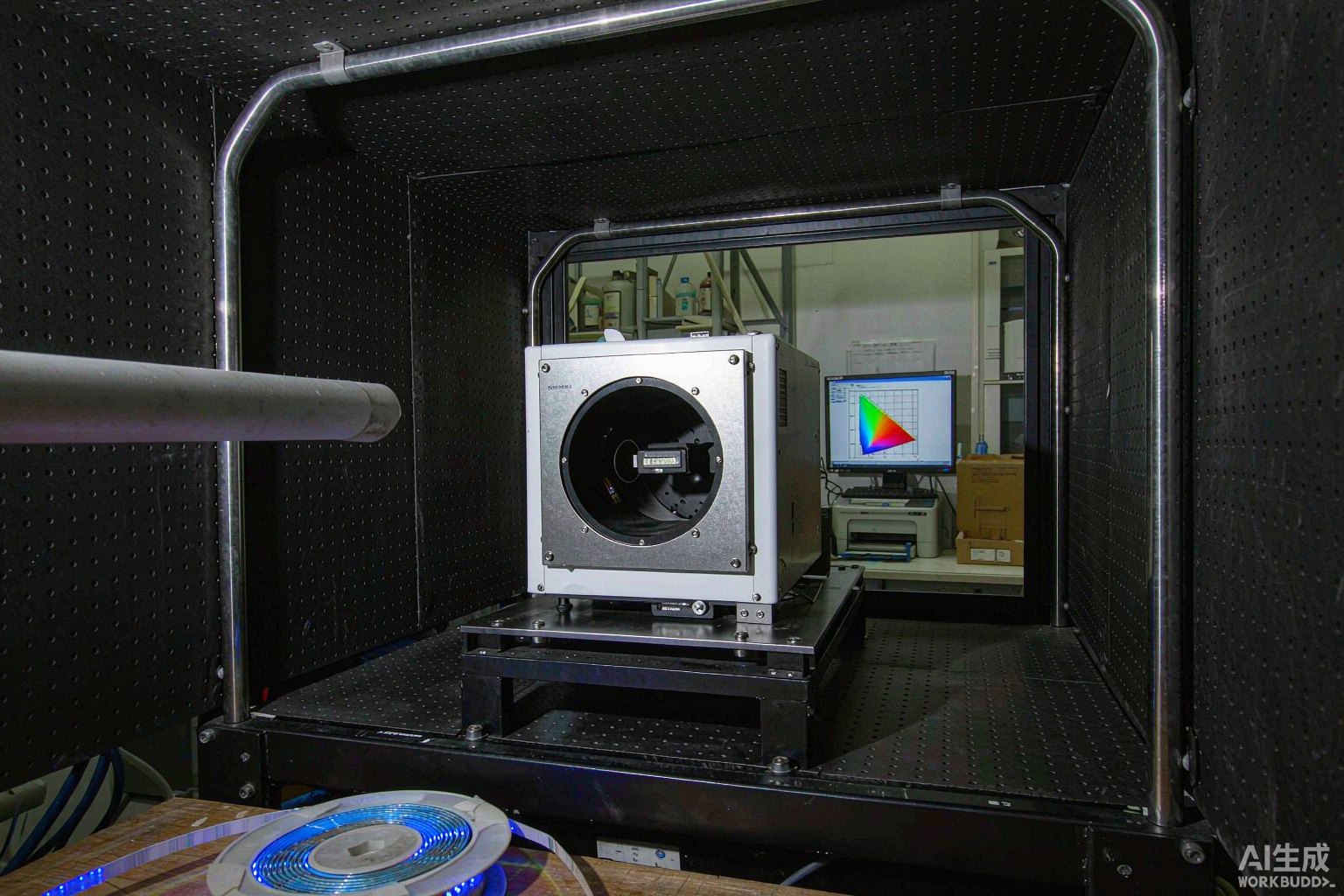
Photometric Laboratory
Two spectroradiometers with 1 m spheres, dark booth at 25 ± 1 °C, LM-80 ageing racks.
Every production reel is measured for chromaticity, flux and forward voltage, then binned. The laboratory also runs the 6,000-hour LM-80 racks and issues TM-21 projections, and it holds the bin records that let a customer order a matching reel years after the original installation.
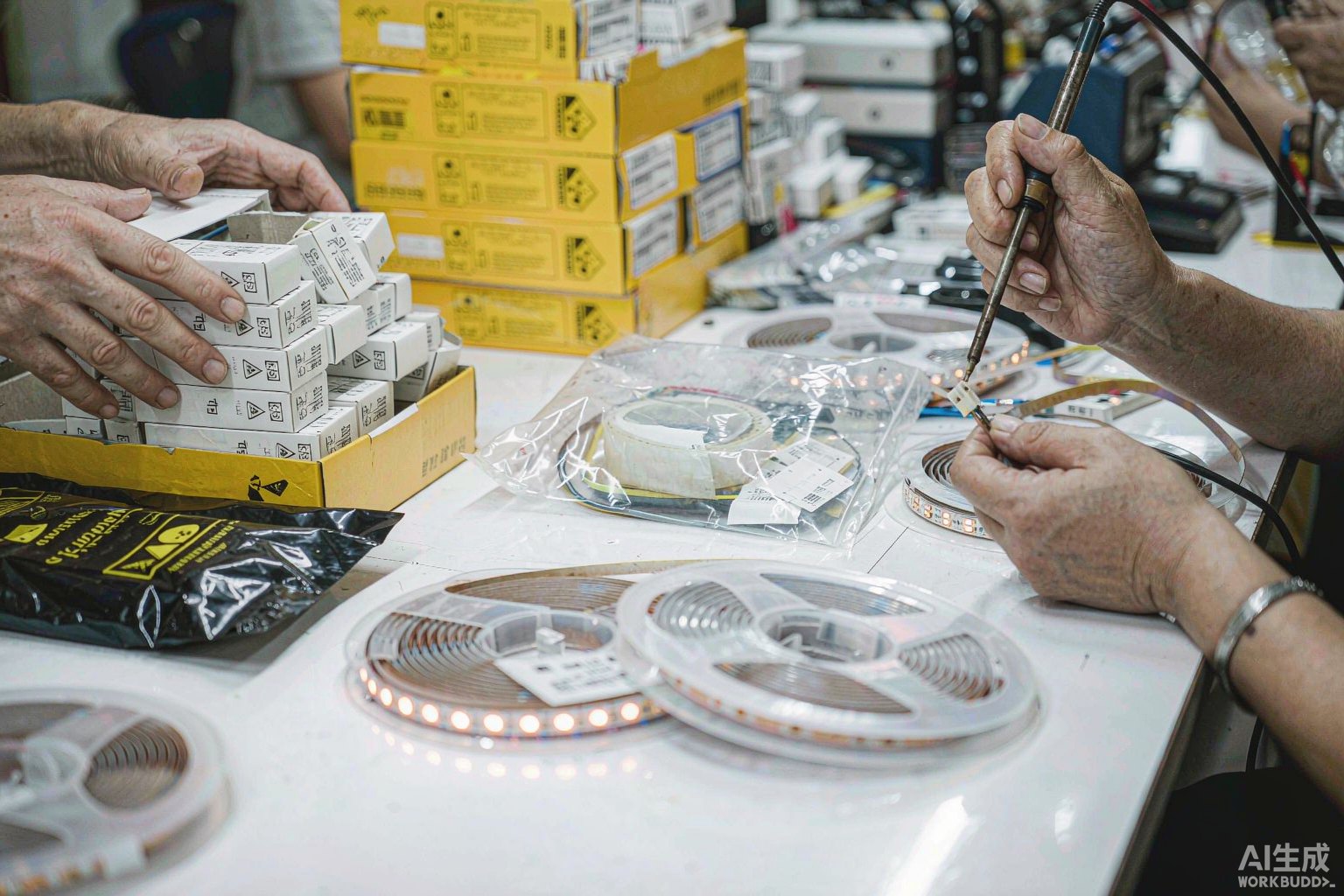
Assembly & Packing
Connector soldering, IP sealing, taping, labelling and export packing of finished reels.
Reels are cut to length, terminated, pull-tested at 30 N, sealed and labelled with the customer label, barcode and bin code. Packing is per panel or per store for project work, because mixed packing is how a correctly produced order becomes an incorrect installation.
Equipment, capacity and tolerance
Capacity tells you the volume each line can carry; tolerance is the process figure we hold, not the machine's positioning specification. Where a number depends on the product — cut length, power per metre, sorting step — it is stated on the product page instead of here.
| Model | Type | Qty | Travel / capacity | Positioning | Used for |
|---|---|---|---|---|---|
| ASM AD 830 | COB die bonder | 3 | Reel up to 50 m | ±25 µm placement | 320 / 480 / 504 chips per metre, 8–10 mm FPC |
| Yamaha YSM20R | SMT pick-and-place | 4 | FPC width 5–15 mm | ±0.05 mm | 45,000 components per hour, 0402 to 5050 plus QFN |
| Heller 1913 MK5 | Reflow oven, 10 zone | 4 | — | ±1.5 °C per zone | Nitrogen atmosphere, 260 °C peak for SAC305 |
| Koh Young KY8030 | 3D solder paste inspection | 4 | — | ±1 µm height | Inline SPI before placement on every line |
| Silicone extrusion line, custom | Platinum-cure silicone extrusion | 2 | 6×12 to 10×20 mm profile | ±0.2 mm profile | Neon flex and IP67 / IP68 tube builds |
| Nordson Asymtek SL-940 | Conformal silicone coating | 1 | Reel up to 50 m | ±5 µm coating | IP54 and IP65 silicone coating |
| Everfine HAAS-2000 | Spectroradiometer with 1 m sphere | 2 | 380–780 nm at 1 nm | ±2% flux, ±0.001 duv | Reel binning and LM-79 reporting |
| Custom reel tester | Automatic electrical test | 3 | Reel up to 50 m | ±0.5% V and A | Forward voltage, current and continuity per reel |
| Custom burn-in racks | Ageing at rated current | 2 | 2,000 reels capacity | ±2 °C chamber | 24-hour burn-in on 100% of reels |
| Custom pressure rig | IP67 pressure test | 3 | 0.3 bar | ±0.01 bar | 60-second hold on every outdoor assembly |
| ESPEC TSA-71 | Thermal shock chamber | 1 | −40 °C to +125 °C | ±1 °C | Validation of new die attach and sealing processes |
Equipment list current as of 2026. Model numbers are listed because buyers check them; if a specific model is required for your programme, confirm availability before quoting.
The floor, as it runs
Come and look at it
A factory page is a claim; an audit is evidence. We schedule customer audits and site visits within two weeks, covering the full route your order will take — incoming dies and FPC, die bonding, SMT, extrusion, sealing, binning and packing. Remote video audits are available where travel is impractical, with the camera walked to whichever line or record you want to see.
- Two weeks' notice for on-site audits, including customer-specific checklists
- Remote video audit with a live spectroradiometer measurement demonstration
- Records available on site: calibration certificates, bin records, burn-in logs, LM-80 data
- NDA signed before any customer drawing or FPC design is shown during a tour
Send a specification, get a quotation in 24 hours
Tell us the product type, run length, wattage, CCT, CRI and IP rating. You will receive a fixed price, a lead time, and the feed and driver arrangement in writing — no obligation, and no sales call unless you ask for one.