
SMD 2835, 5050 and 5630 LED Strips for Volume Lighting Projects
SMD LED strips on 2835, 5050 and 5630 packages: 60–240 LEDs/m, 12 V and 24 V, 100–190 lm/W, CRI 80–90, IP20–IP68, 15–20 day production lead time.
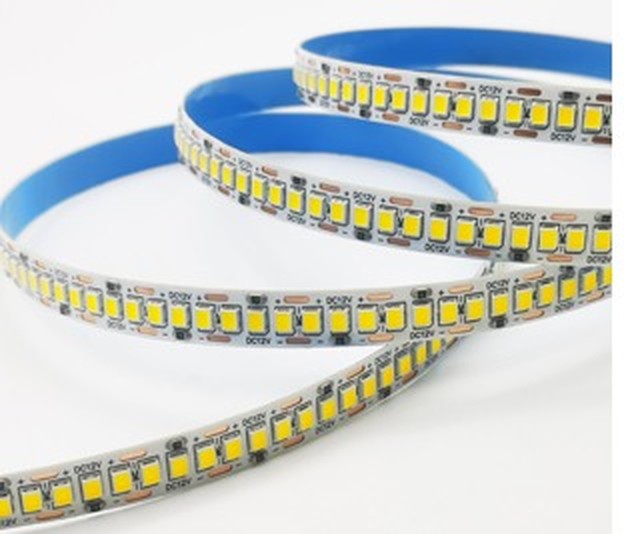
An SMD LED strip carries packaged surface-mount LEDs on a flexible PCB at a fixed pitch, which makes it the lowest cost per lumen option for volume lighting. HFY LED produces 2835, 5050 and 5630 strips from 60 to 240 LEDs per metre on 12 V or 24 V, at 100–190 lm/W and CRI 80–90, with reels from 5 m and typical production lead times of 15–20 working days.
Scope: what this product page covers
This page covers constant-voltage SMD strips for general illumination, signage and OEM fixtures. Strips requiring a constant-current driver, high-density 240 LEDs/m builds in a 5 mm width, and strips with an integrated IC belong on the addressable page or on a custom quotation. COB strips are covered separately because the light quality and cost structure are different.
Specifications
| LED package | 2835, 5050, 5630 |
|---|---|
| Density | 60 / 120 / 240 LEDs per metre |
| Input voltage | 12 V DC or 24 V DC |
| Power | 4.8 – 24 W/m |
| Efficacy | 100 – 190 lm/W at 4000 K, CRI 80 |
| Colour rendering | CRI 80 standard, CRI 90 on request |
| Cut length | Every 3 LEDs (25 mm at 120 LEDs/m on 24 V) |
| Sealing | IP20, IP65, IP67, IP68 |
| Lead time | 15–20 working days for production runs |
Materials
- 2 oz and 3 oz copper FPC, white or black solder mask
- SMD 2835 (0.2 W and 0.5 W), 5050 (0.2 W tri-chip), 5630 (0.5 W)
- Silicone tube, heat-shrink or nano coating for IP65 and above
- Constant-voltage drivers, 12 V and 24 V, 30–400 W
- JST SM, DC barrel and bare-wire connectors
Manufacturing process
- Package and bin selection Package choice follows the optics: 2835 for even linear light in a diffused profile, 5050 for higher flux per metre in the same width, 5630 for the highest flux where a wider profile is acceptable. Reels are built from a single flux and voltage bin so that parallel runs share current evenly.
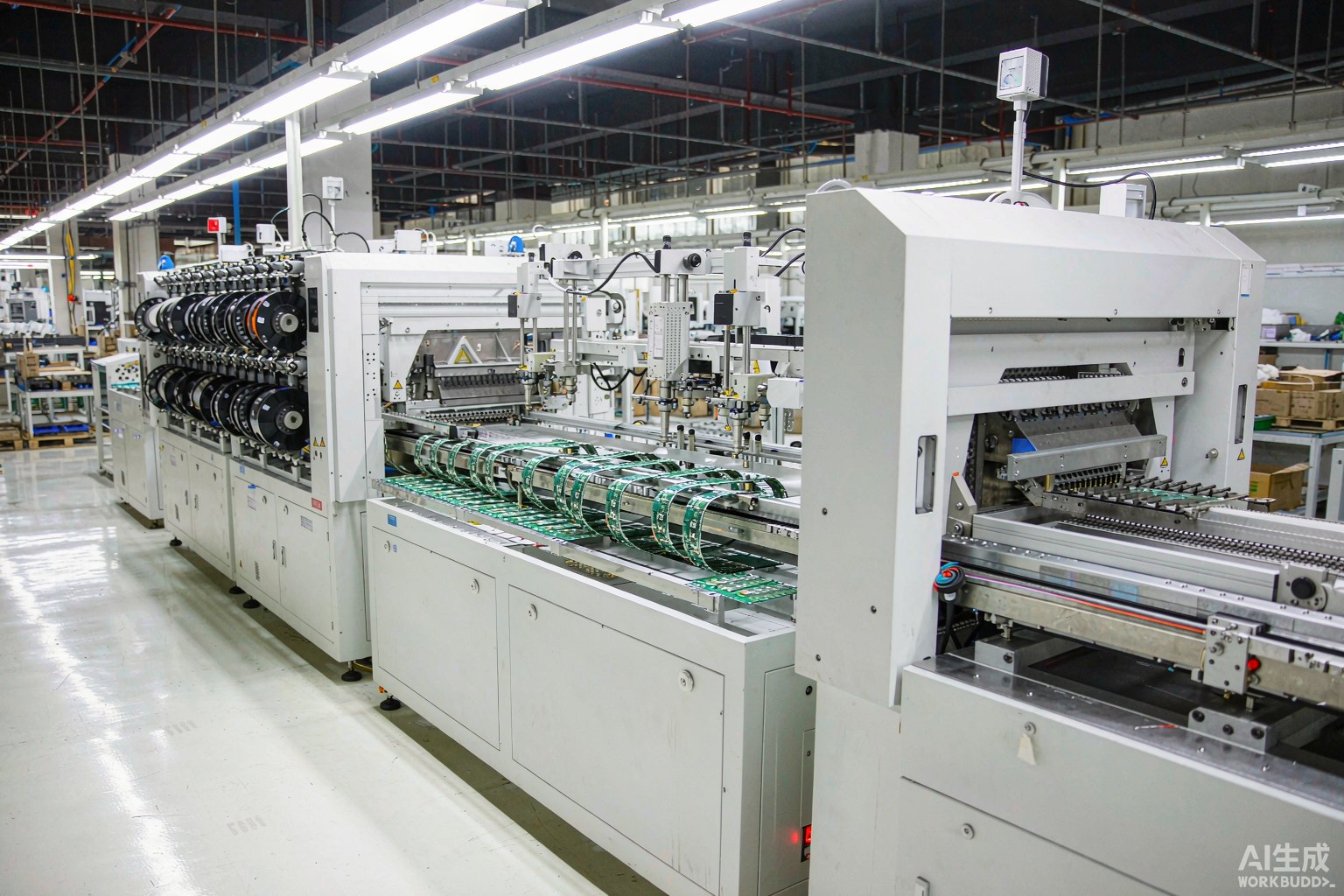
- SMT assembly Panels of 5 m strip run through solder paste printing, placement and reflow at a 260 °C peak. Placement accuracy is ±0.05 mm, and every panel passes automated optical inspection for tombstoning, offset and solder volume before it is cut into reels.
- Electrical test Each reel is tested at rated voltage for forward voltage per metre, open segments and reverse-polarity protection. A 5 m reel of 120 LEDs/m at 24 V should read 1.1–1.3 A; a reel outside that window is rejected rather than derated.
- Sealing IP65 uses a silicone coating or heat-shrink sleeve; IP67 uses a full silicone tube with glued end caps; IP68 adds potting at the cable entry. Sealing adds 1–2 mm to the profile height, which is why IP65 strip rarely fits a 10 mm recessed profile designed for IP20.
- Packing Reels are packed in antistatic bags with a desiccant, labelled with bin, flux, voltage and lot number. Export cartons are rated for air freight and hold 100 reels of 5 m.
SMD LED Strip in production
Typical applications
- General cove and under-cabinet lighting
- Signage and channel letter illumination
- OEM fixture integration where cost per lumen dominates
- Cold storage and industrial enclosures
- Vehicle and marine interior lighting on 12 V systems
- Event and stage set lighting in rental quantities
Quality and documentation
- AOI inspection on 100% of SMT panels
- Forward voltage and current draw recorded per reel
- Flux and CCT binning maintained across the production lot
- Salt spray testing on request for IP65 and above
- CE, RoHS and REACH documentation with every shipment
What we do not do
We do not offer SMD strips below 60 LEDs/m, because at that pitch the strip no longer reads as a continuous line and a COB strip is a better answer for the same money. We also do not warrant IP65 heat-shrink builds in permanent outdoor installation where the sleeve is exposed to UV: the sleeve yellows within 18–24 months, and the correct specification is silicone extrusion.
Technical questions
Should I choose 12 V or 24 V LED strip?
Choose 24 V for any run above 5 m and for commercial installations. Doubling the voltage quarters the voltage drop for the same power, so a 24 V strip runs 10 m from one feed where a 12 V strip manages 5 m. 12 V remains sensible for short runs, vehicles and small decorative work.
How many lumens do I get per metre?
A 2835 strip at 120 LEDs/m and 14.4 W/m produces roughly 1,600–2,100 lm/m at CRI 80, depending on the bin; the same strip at CRI 90 loses 10–15% of that flux. Efficacy above 180 lm/W requires a 0.5 W package and a 24 V design, and costs about 25% more per metre.
Why do my strips fail at the cut mark after a few months?
Almost always moisture ingress at the cut end on an IP65 build. The cut exposes the copper, and a heat-shrink end cap that is not sealed with neutral silicone lets humidity in. On outdoor work we supply silicone end caps and specify potting rather than tape.
Adjacent products and capabilities
COB LED Strip
A COB LED strip is a flexible linear light source in which bare LED dies are bonded directly onto the FPC and sealed under one continuous phosphor layer, so the light is dot-free instead of showing individual emitters. HFY LED builds COB strips at 320, 480 and 504 chips per metre on 24 V, delivering 8–15 W/m at CRI 90–95 with SDCM ≤ 3 colour consistency, in reels from 5 m to 50 m and sealing from IP20 to IP68..
View productRGB & Pixel LED Strip
An addressable pixel strip contains an IC at every LED or every three LEDs, so each pixel can be set to an individual colour and brightness from a controller. HFY LED supplies RGB, RGBW and addressable strips on WS2812B, WS2811 and SPI 12 V and 24 V platforms, from 60 to 144 pixels per metre, with custom pixel mapping, lead frames and IP67 sealing for outdoor media facades..
View productLightbox & Side-Emitting Strip
A lightbox LED strip is a side-emitting or zigzag-arranged strip that throws light sideways into the acrylic face of a sign, producing even brightness without the hot spots of a direct-view strip. HFY LED supplies side-view 3014 and 335 strips and zigzag backlight strips at 0.6–1.5 W per module on 12 V or 24 V, sized to box depths from 60 mm to 300 mm, with IP65 sealing for outdoor signs..
View productQuality & Testing
100% reel electrical test, 24-hour burn-in and SDCM ≤ 3 binning on every order.
Testing capabilitySend a specification, get a quotation in 24 hours
Tell us the product type, run length, wattage, CCT, CRI and IP rating. You will receive a fixed price, a lead time, and the feed and driver arrangement in writing — no obligation, and no sales call unless you ask for one.